
Stake Availability Changes as Signals for Side Adjustments in Live Competitions
Stake shifts in active competitions often reveal patterns that participants use to time side changes from back to lay positions or the reverse, and observers note these movements through continuous monitoring of order book depth on exchange platforms. Data from multiple events shows liquidity layers adjusting rapidly as new stakes enter or exit the market, creating windows where position reversals align with volume changes rather than price movements alone.
Understanding Stake Fluctuations in Real Time
Available stakes represent unmatched liquidity at specific price points, and when these amounts contract or expand suddenly during a match or race, they indicate potential momentum shifts that traders track to decide on side adjustments. Researchers have documented how clusters of stakes at certain odds levels tend to dissipate before key moments in football matches, while similar patterns emerge in horse racing as the field approaches the final furlongs. Those monitoring these changes combine order flow data with in-play statistics to identify when a reversal might offer balanced risk exposure across both sides of a market.
Patterns in stake distribution often appear in layered depth, where front-line liquidity thins out while deeper levels hold larger unmatched amounts, and this configuration frequently precedes opportunities for tactical flips. Studies from academic institutions have examined how these depth variations correlate with actual event outcomes across thousands of soccer fixtures and thoroughbred races, revealing consistent timing signals that repeat across different venues and competition formats.
Application in Football and Racing Markets
Football markets display stake shifts most visibly during stoppage time periods, when additional minutes added by officials prompt fresh liquidity to enter at adjusted prices, allowing participants to observe these inflows before committing to side changes. Racing events show comparable activity in the minutes leading up to the off, as paddock information circulates and causes stake volumes to migrate between price points on the exchange grid. Observers note that tracking these migrations requires attention to both the size and the speed of stake movements rather than isolated price ticks.
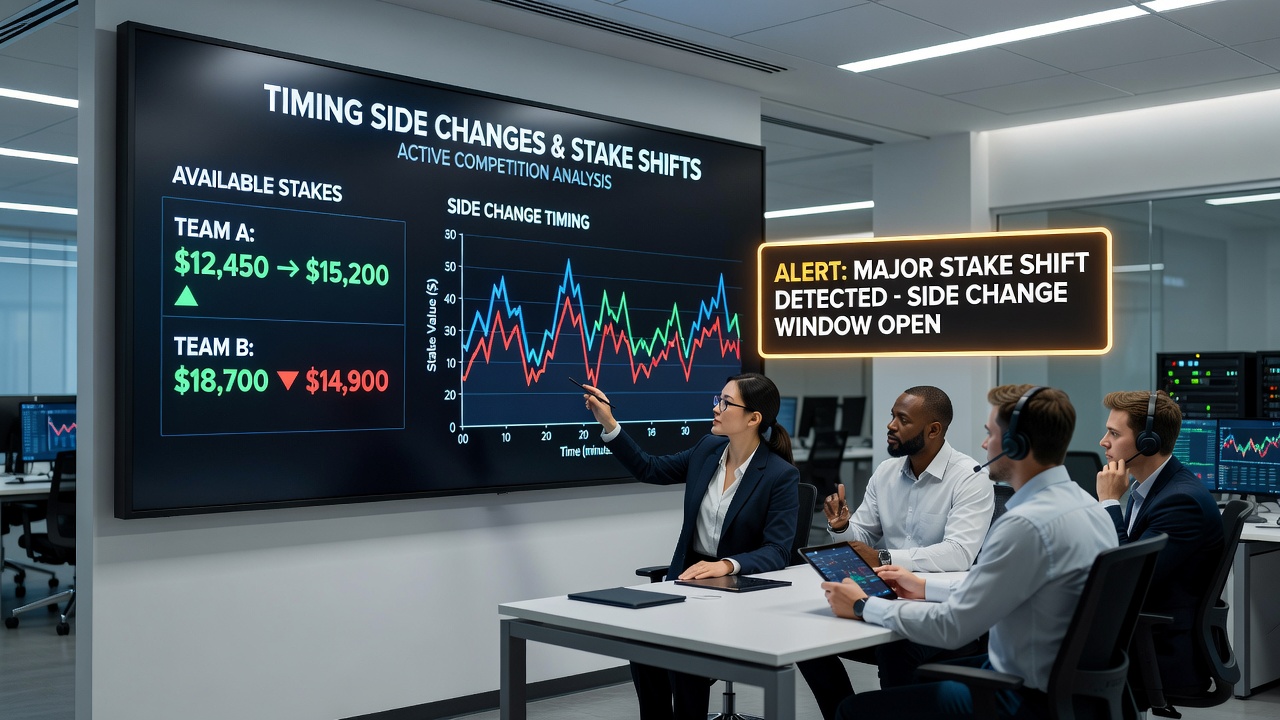
Take one dataset compiled across European and Australian racing circuits that demonstrated how stake reductions at favorite prices often coincide with late support for longer-priced runners, creating conditions where a side switch can capture value on both outcomes. Similar analysis applied to soccer depth pools indicates that volume clusters forming around half-time frequently signal impending adjustments in the second period, and participants who monitor these clusters report improved alignment between their position changes and subsequent market movements.
July 2026 Market Observations
Activity levels recorded in July 2026 across major exchange platforms showed elevated stake turnover during international tournaments, with data indicating that liquidity layers shifted more frequently in matches involving teams with strong recent form. Regulatory reports from the Nevada Gaming Control Board documented corresponding increases in exchange-based activity during the same period, highlighting how stake availability patterns became more pronounced amid higher overall participation. Those analyzing these July figures found that side changes timed around visible stake contractions yielded measurable differences in position outcomes compared to changes executed without reference to liquidity data.
Industry organizations such as the American Gaming Association have compiled summaries of exchange trading volumes that further illustrate how stake shifts serve as leading indicators in both racing and team sports. Academic papers published through research centers in Australia have explored similar dynamics, noting that depth pool transitions often precede price adjustments by several seconds or even minutes in certain market conditions.
Practical Monitoring Techniques
Effective observation involves setting alerts for stake volume thresholds at key price levels and cross-referencing these alerts with live event feeds to confirm whether a shift aligns with on-field developments. Participants frequently combine multiple data streams, including total matched amounts and unmatched order sizes, to build a clearer picture of when a side change carries lower exposure. Evidence suggests that markets with deeper overall liquidity tend to produce more reliable signals, whereas thinner books require greater caution before executing reversals.
One case study covering a series of 2026 Premier League fixtures revealed that stake expansions at underdog prices during the final twenty minutes often preceded late equalizers, prompting traders to adjust positions accordingly. Comparable findings emerged from racing data where pre-race stake migrations away from market leaders aligned with subsequent non-finishers or unexpected place results. These examples demonstrate how consistent tracking of available stakes can inform decision timing without relying on predictive models alone.
Conclusion
Stake availability shifts continue to function as observable markers that participants reference when timing side changes across active competitions, and ongoing data collection from regulatory bodies and research institutions supports the repeatability of these patterns in both football and racing environments. July 2026 figures reinforced the value of monitoring liquidity layers as part of broader market analysis strategies, while cross-regional reports from sources such as the Australian Gambling Research Centre provide additional context on how these dynamics evolve across different regulatory frameworks. The approach remains grounded in direct observation of order book behavior rather than external forecasts.