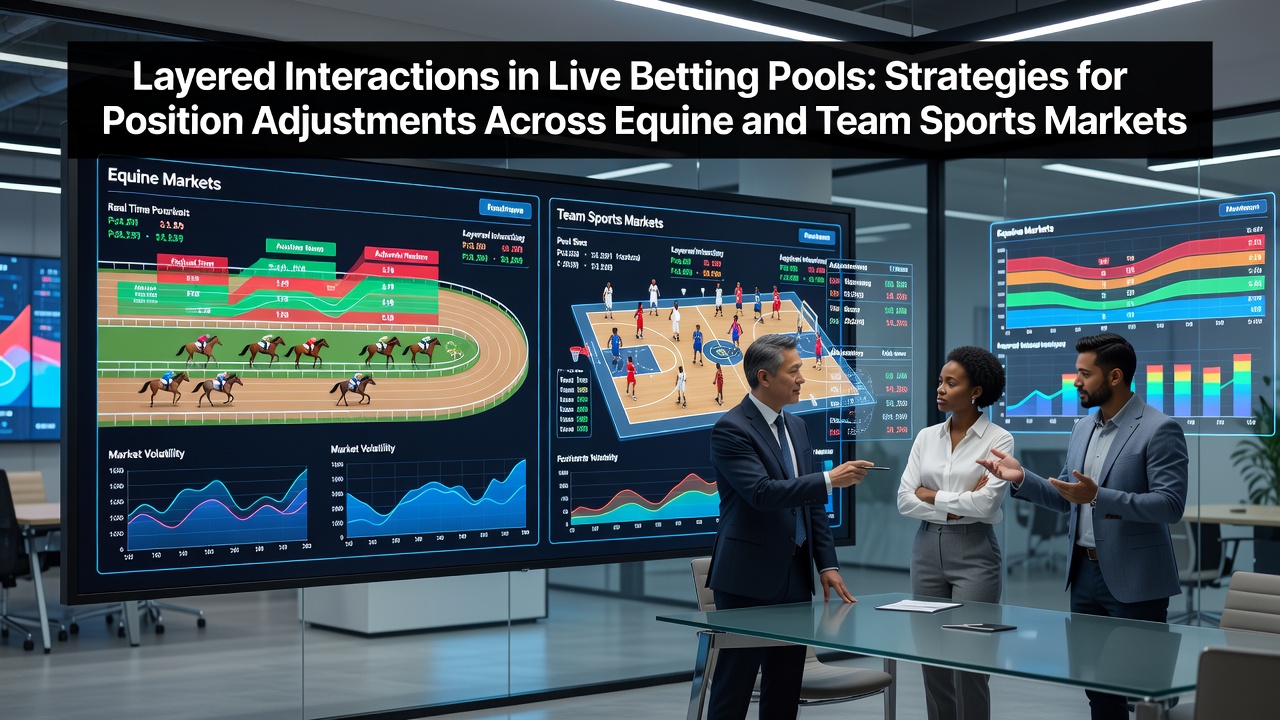
Position Tweaks Across Depth Layers in Equine and Team Sports Live Pools
Market participants track multiple liquidity tiers when they adjust holdings during live equine events and team competitions, since price levels form distinct bands that shift as new orders arrive and existing ones cancel. Data from July 2026 shows increased activity in these layered structures across major exchanges, where volume at each price point creates opportunities for position switches that respond to real-time changes in supply and demand.
Core Elements of Depth Layers in Live Pools
Depth layers represent stacked price points where backers and layers place orders, and each tier holds a measurable quantity that influences how quickly a market can move when new information arrives. Observers note that equine races often display tighter clusters near the starting odds because early money concentrates around favorites, while team sports markets spread liquidity more evenly across a wider range of outcomes because goals or points occur in bursts. Researchers have documented that these differences affect how traders time their entries and exits, since a sudden withdrawal from one layer can cascade through adjacent bands within seconds.
Volume at each level also signals potential resistance or support, and analysts track cumulative totals to identify when a layer might absorb large orders without major price displacement. In July 2026 reports, several platforms recorded higher average depth in soccer markets during European summer tournaments compared with standard league fixtures, a pattern that allowed participants to execute larger switches before prices adjusted.
Equine Market Adjustments During Races
Horse racing pools update continuously as the field progresses, and position adjustments rely on monitoring how front-runners versus closers influence the distribution of liquidity across finishing positions. Participants often shift holdings when early pace data alters perceived probabilities, moving from one price band to another once a layer shows signs of depletion. Studies indicate that markets for longer-distance races maintain deeper secondary layers because outcomes remain uncertain until late stages, giving traders more time to evaluate cumulative volume before committing to a reversal.
Traders watch for imbalances where one side of a layer thins rapidly while the opposite side holds steady, because such patterns frequently precede accelerated price movement. Exchange records from mid-2026 confirm that these signals appeared consistently in both flat and jump meetings, allowing systematic repositioning when depth metrics crossed predefined thresholds.
Team Sports Dynamics and Layer Interactions

Team sports such as soccer and basketball feature layered markets that respond to in-game events like substitutions, score changes, and time remaining, each of which can redistribute volume across multiple outcome tiers simultaneously. Data shows that goal-scoring moments often trigger immediate withdrawals from certain layers while new orders populate others, creating brief windows for participants to adjust exposure before the market stabilizes. Observers have recorded that basketball markets, with their higher scoring frequency, exhibit more rapid layer rotations than soccer, where longer periods of low activity allow depth to rebuild gradually.
Position adjustments in these environments frequently involve moving between related contracts, such as switching from a match-winner layer to a total-goals layer when one tier shows concentrated volume that suggests an imminent shift. Reports compiled in July 2026 highlight how participants used cumulative depth ratios to time these transitions, particularly during tournaments where multiple matches overlapped and liquidity flowed between venues.
Timing and Execution Across Both Sectors
Coordinated strategies across equine and team sports markets require attention to cross-market correlations, since major events can draw liquidity away from one sector toward another within the same session. Practitioners compare layer depletion rates in racing pools against those in live football markets to identify when capital rotation creates favorable conditions for repositioning. Evidence from exchange analytics indicates that synchronized monitoring reduces slippage because traders can anticipate where incoming volume will land once one market absorbs an order.
Order-book software now provides real-time visualizations of layer thickness, and users apply these tools to set automated alerts when a specified percentage of depth disappears from a target band. According to figures released by the Australian Gambling Research Centre, adoption of such visualization tools rose notably during the first half of 2026, coinciding with expanded live coverage of both racing and team events.
Conclusion
Layered interactions in live betting pools continue to shape how participants manage positions in equine and team sports markets, with depth metrics providing measurable signals for timing adjustments. Records from July 2026 demonstrate that systematic observation of volume distribution across price bands supports more precise execution when markets move quickly. Further analysis from the International Center for Responsible Gaming underscores the importance of tracking these structural features as trading volumes expand across overlapping schedules.