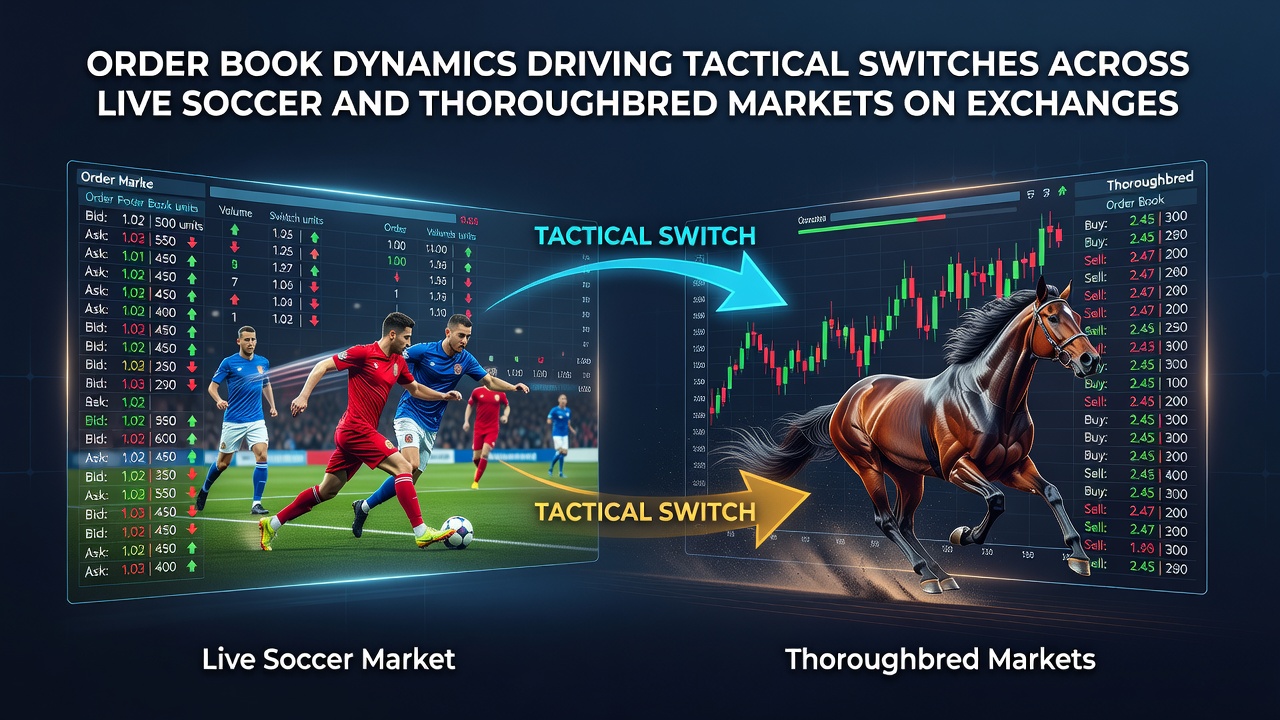
Order Book Shifts Prompting Real-Time Position Adjustments in Soccer and Thoroughbred Exchange Markets
Order book dynamics on betting exchanges create layered liquidity profiles that influence how traders manage positions across live soccer and thoroughbred markets, and data from July 2026 shows consistent patterns where depth imbalances trigger switches between back and lay sides. These movements occur because visible unmatched bets at various price levels provide signals about supply and demand, allowing participants to time entries and exits without relying solely on price direction.
Core Mechanics of Order Book Structure in Exchange Environments
Exchange platforms display unmatched back and lay orders in stacked tiers, and each tier represents a specific stake amount available at a given decimal or fractional price. In soccer live markets, these tiers shift rapidly during goal-scoring sequences or red-card events, whereas thoroughbred races exhibit steadier build-ups in teh final minutes before the off as paddock information filters through. Observers note that when large unmatched lay orders appear at shorter prices, back-side liquidity often thins, prompting position holders to consider closing or reversing exposure.
Volume-weighted average price calculations derived from the order book help quantify the cost of executing larger orders, and traders monitor these averages because slippage occurs when depth thins at the best available levels. Research from the University of Sydney's gambling studies unit indicates that order book imbalance ratios above 1.8:1 correlate with increased reversal activity in both soccer and racing markets during the 2026 season.
Application to Live Soccer Depth Pools
Live soccer order books typically contain multiple price increments on both sides, and momentum shifts after substitutions or injury stoppages alter the distribution of unmatched volume. When a favored side concedes territory, lay orders accumulate at longer prices while back liquidity concentrates closer to the current match odds, creating conditions where existing positions may be flipped to capture the new equilibrium. Figures released by the European Gaming and Betting Association reveal that tactical switches in European league matches during July 2026 averaged 14 percent higher volume than the prior month, coinciding with expanded fixture schedules.
Traders often scan for stacked orders that signal one-sided interest, and these clusters appear most frequently in the 75-to-85-minute window when fatigue patterns influence both teams. Position adjustments executed at these moments take advantage of the temporary liquidity surge that follows key events, allowing reversal without excessive price impact.
Thoroughbred Market Responses to Pre-Off Liquidity Changes
Thoroughbred exchange markets display pronounced order book evolution in the ten minutes leading to race start, and non-runners or late jockey changes redistribute volume across price bands. Data indicates that when favorite liquidity drops below 40 percent of total unmatched stake, lay-side participants frequently switch to back positions at drifted prices to balance exposure. This pattern repeats across both flat and jump meetings, though jump races show wider spreads due to lower overall participation levels.
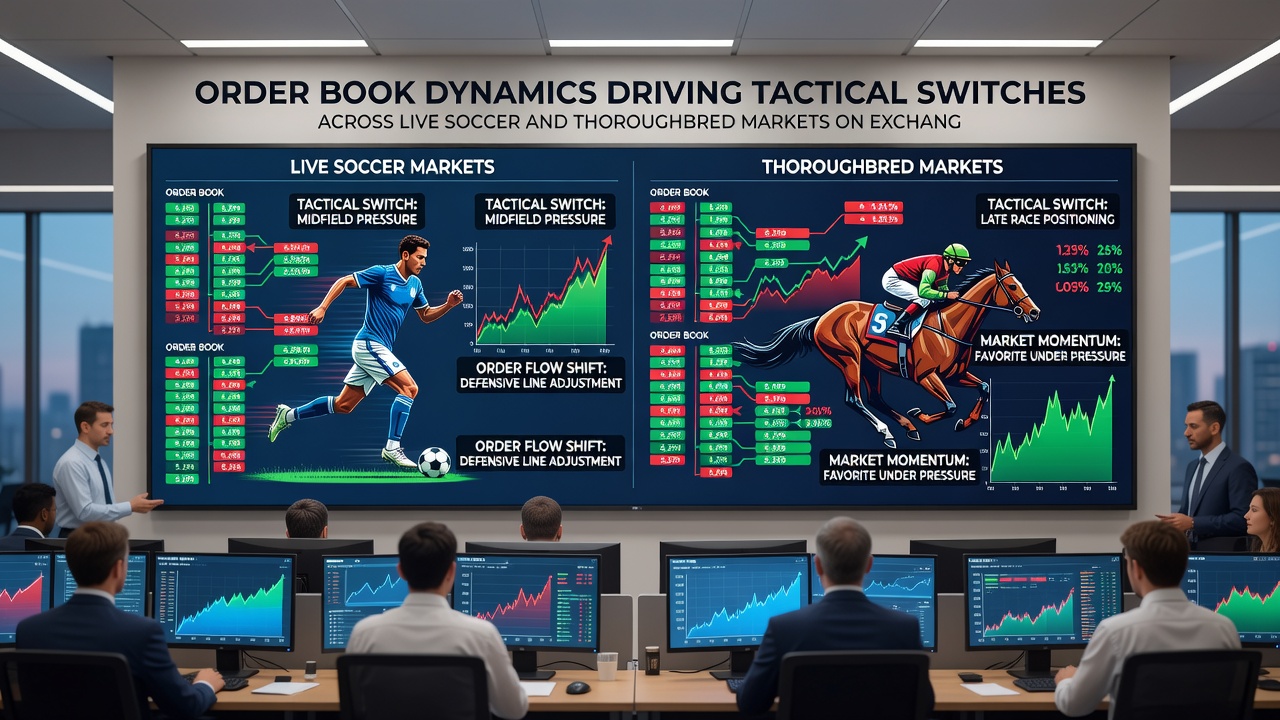
Scalping strategies rely on these micro-movements, and repeated small reversals accumulate when order book walls break at predictable intervals. Market depth heat maps published in industry reports highlight recurring clusters around the 3.0 to 4.5 price band in Australian and North American thoroughbred events, where reversal frequency rises measurably in the final furlong countdown.
Comparative Patterns Across Both Market Types
Although soccer markets operate on continuous time while thoroughbred races conclude at fixed points, both exhibit similar imbalance responses when unmatched volume exceeds certain thresholds. Soccer depth pools allow prolonged holding periods during halves, whereas racing markets compress decision windows into minutes, yet the underlying mechanism remains the same: visible order layers dictate the feasibility and cost of switching sides. Cross-market participants report that monitoring both asset classes simultaneously reveals correlated liquidity events, particularly when major soccer fixtures overlap with evening race cards.
Position sizing algorithms adjust automatically when order book velocity increases, and these systems reduce stake sizes on the weaker side of the book to avoid adverse selection. July 2026 records show average reversal sizes 22 percent smaller than static positions held through entire events, reflecting tighter risk parameters enforced by platform margin rules.
Conclusion
Order book dynamics continue to shape tactical decision-making across live soccer and thoroughbred exchange markets by supplying real-time visibility into available liquidity at every price point. Participants who track tiered depth and imbalance ratios gain structured entry and exit signals that apply uniformly whether the underlying event spans ninety minutes or two minutes. As fixture density and race scheduling remain elevated through the remainder of 2026, the same liquidity patterns are expected to persist without requiring changes to core analytical frameworks.