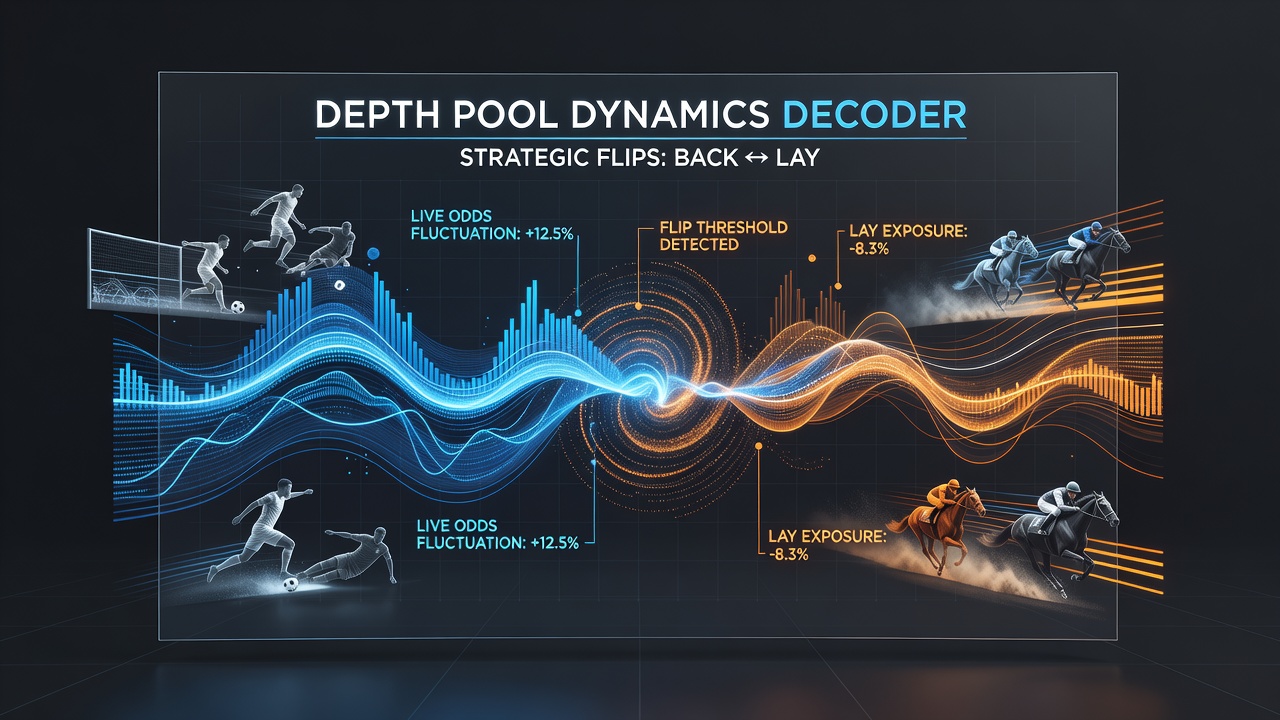
Decoding Depth Pool Dynamics for Strategic Flips Between Back and Lay in Football Matches and Races
Market participants track layered order books on betting exchanges to identify shifts in available liquidity that create openings for position reversals between back and lay orders in football matches along with horse races, and these depth pool patterns emerge from the continuous interaction of unmatched stakes at multiple price levels. Data compiled through June 2026 shows that football markets often display concentrated volume clusters near key score thresholds while racing exchanges reveal thinner layers during pre-race adjustments and post-jump fluctuations.
Core Mechanics of Depth Pool Structures
Depth pools consist of stacked bids and offers that reflect cumulative unmatched volume across price increments, and observers note how these stacks expand or contract in response to incoming orders from both recreational and professional accounts. In football exchanges the pools thicken around popular scorelines or time-based outcomes whereas racing markets demonstrate rapid thinning when runners approach the stalls or when stewards announce inquiries. Researchers at the Australian Gambling Research Centre have documented how these variations produce measurable entry points for traders who monitor order book imbalance ratios over successive trading intervals.
Volume distribution across layers determines the ease of execution for any flip from back to lay or the reverse, and participants who study the cumulative depth at each tick interval gain insight into potential slippage costs during position switches. When one side of the book absorbs incoming flow faster than the opposing side replenishes, the resulting asymmetry signals an opportunity window that closes once equilibrium returns.
Football Match Patterns and Liquidity Shifts
Football depth pools evolve through distinct phases tied to match events such as substitutions, goal concessions, and added time announcements, and analysts have recorded pronounced layering changes during the 45th and 90th minutes across major European leagues in early 2026. These shifts expose temporary imbalances where back orders at shorter prices face reduced opposing lay volume, allowing strategic reversals before the market rebalances. Figures released by the European Betting and Gaming Association indicate that average layer depth in live football contracts contracts by 18 to 27 percent immediately after significant events, creating repeatable windows for position flips.
Traders monitor the rate at which new orders refill depleted layers because sustained refill speed correlates with continued directional pressure on odds movements. One documented case from the 2025-2026 season involved a Serie A contest where lay depth at 2.8 evaporated within ninety seconds of a red card, permitting multiple accounts to flip previously backed positions at improved prices before fresh liquidity arrived.
Racing Market Depth and Pre-Off Adjustments
Racing exchanges display depth pool compression in the final minutes before the off when late support concentrates at specific price points, and this compression often precedes rapid odds adjustments once the race begins. Observers tracking Australian and North American thoroughbred markets through June 2026 recorded instances where lay layers thinned by more than 40 percent in the three minutes preceding jump, exposing back orders to quick reversals at favorable differentials. Those who study the sequence of layer erosion versus replenishment identify tactical moments for switching exposure without excessive slippage.

Post-race inquiries and photo finishes further alter depth profiles by pausing unmatched order matching and redirecting flow toward related markets such as place or forecast contracts. Data from the Canadian Centre for Gaming Research shows that inquiry-related pauses extend average layer recovery times by 65 seconds, extending the duration of any imbalance created by the initial result announcement.
Execution of Strategic Position Reversals
Position flips require simultaneous assessment of current depth across both back and lay sides plus projected refill velocity after the switch executes, and algorithms used by institutional desks often incorporate real-time imbalance metrics to time these moves. Market makers in football and racing exchanges have noted that successful reversals cluster around periods when one side of the book shows at least 2.5 times the volume of the opposing side at the target price level. Execution then proceeds through staged order placement that tests refill response before committing full stake.
Volume cluster analysis helps distinguish transient liquidity gaps from sustained directional bias, and those monitoring the ratio of aggressive to passive orders within each depth layer refine their timing accordingly. In June 2026 sessions several exchanges reported elevated flip activity during evening racing cards where multiple meetings overlapped, producing cross-market depth interactions that amplified imbalance signals.
Conclusion
Depth pool dynamics provide structured signals for timing back-to-lay and lay-to-back reversals in both football and racing exchange environments, and ongoing data collection through regulatory and academic channels continues to map how these liquidity layers respond to event-driven flow. Market participants who integrate layer imbalance metrics with refill velocity observations maintain an informational edge when executing position switches across live contracts.